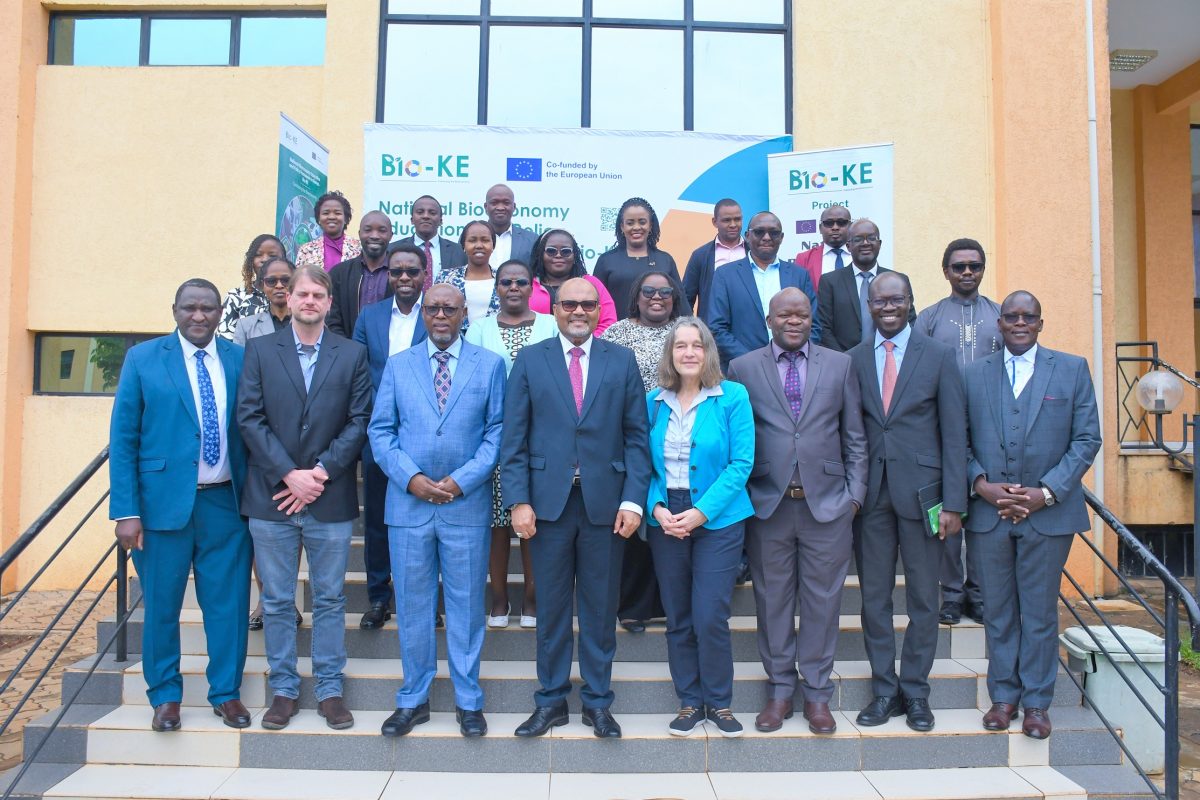
The National Commission for Science, Technology and Innovation-NACOSTI on Monday convened a high-level stakeholder forum on the National Bioeconomy Education and Policy Framework in Kenya (Bio-KE), bringing together key leaders in science, research, and innovation to chart a coordinated path toward a sustainable bio-based economy. The forum was graced by the Permanent Secretary, State Department for Science, Research and Innovation, Prof. Shaukat Abdulrazak who reinforced the Government’s commitment to strengthening Kenya’s science and innovation ecosystem.
In his address, the Prof. Shaukat emphasized the strategic importance of the bioeconomy in driving sustainable economic growth, climate resilience, and industrial transformation. He noted that Kenya’s rich biodiversity, strong agricultural base, and expanding research capacity position the country to become a regional leader in bio-based innovation.
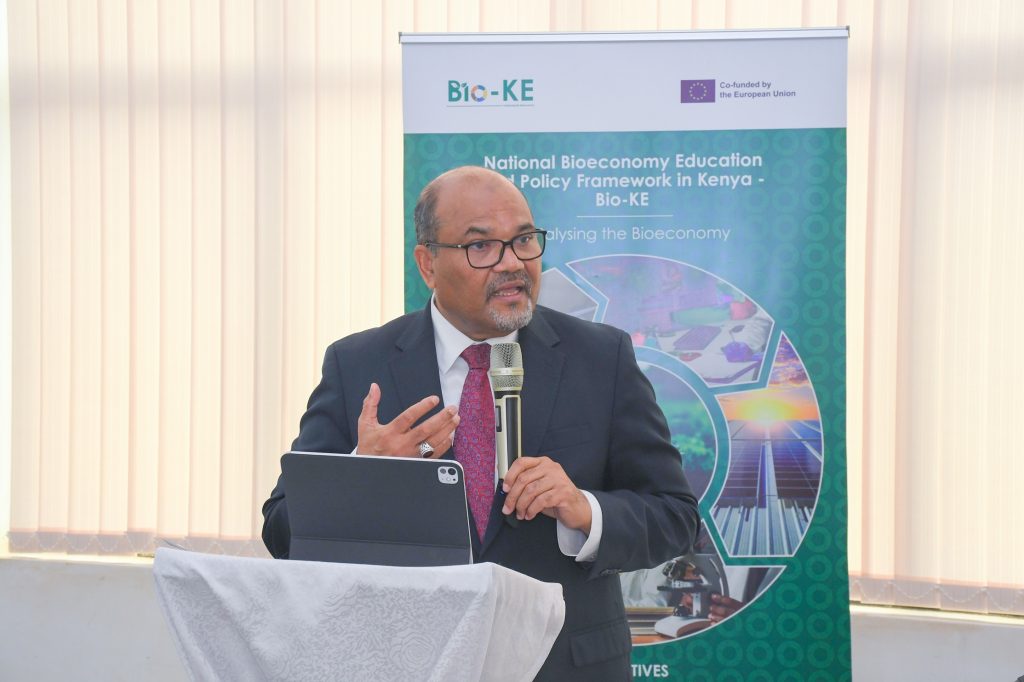
He said that between 20 – 26 percent of Kenya’s Gross Domestic Product (GDP) is linked to the bioeconomy including agriculture, forestry, fisheries, and other bio-based sectors. With improved policy alignment and investment in research and innovation, the sector could become a major driver of job creation and sustainable industrial growth. He also called for urgent action to transform organic waste into valuable economic resources. The rapidly growing Bio economy industry will create numerous opportunities and build synergies among sector players
Prof. Shaukat also emphasized on the mounting pressure from increasing volumes of agricultural residues, food waste and other biomaterials. Poor disposal systems have contributed to environmental degradation, greenhouse gas emissions and lost economic potential. “Ethiopia has developed a national bioeconomy strategy, positioning itself as a continental front-runner and Kenya is now looking to follow a similar path by developing a comprehensive framework to guide research, investment, and commercialization in bio-based industries,’’ Prof Shaukat said.
In his address, Prof Shaukat said Kenya has set ambitious targets in science, technology, and innovation, aspiring to allocate up to Ksh.1 trillion of its GDP toward Science, Technology, Research and Innovation (ST&I). This is key as Kenya’s population is anticipated to reach 60m in 2030.
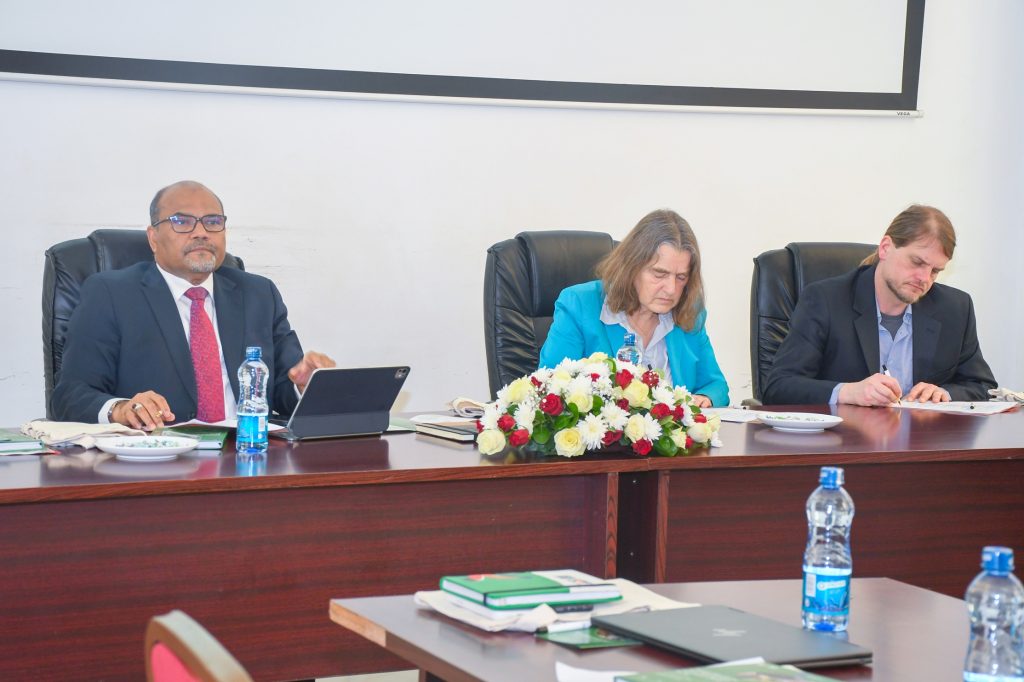
There were also calls for continental coordination under the African Union (AU), with stakeholders urging African Heads of State to champion a unified bioeconomy vision. argue that achieving this goal will require stronger collaboration between government, academia, and the private sector.
The permanent secretary also hinted of a possible Global Bioeconomy Summit scheduled to take place in Dublin, where global leaders will deliberate on sustainable economic models driven by biological resources.
The meeting was hosted by NACOSTI Ag. Director General Dr. David Ngigi and attended by Prof. James Kahindi, Vice Chancellor of Pwani University, Dickson Andala, Chief Executive Officer of the National Research Fund (NRF), among other distinguished stakeholders from academia, government and the private sector. As the host, Dr. Ngigi emphasized on NACOSTI’s mandate to regulate and coordinate science, technology and innovation (STI) in Kenya. He emphasized that the Bio-KE framework aligns with NACOSTI’s broader objective of ensuring that research and innovation contribute meaningfully to socioeconomic development.
Dr. Ngigi reinforced that effective bioeconomy implementation requires harmonized policies, robust research governance system and strengthened linkages between academia, industry and policymakers. He called on for sustained stakeholder dialogue to ensure that education reforms and policy frameworks remain responsive to emerging scientific and market trends.
Prof. Thomas Rewe (Bio-KE coordinator) voiced that the bioeconomy is not merely a scientific concept, but a strategic development pathway capable of transforming agriculture, energy, health, and manufacturing sectors. He noted that Kenya possesses vast biological resources and research expertise, but must strengthen coordination between education, research institutions, industry, and policymakers to unlock full value.
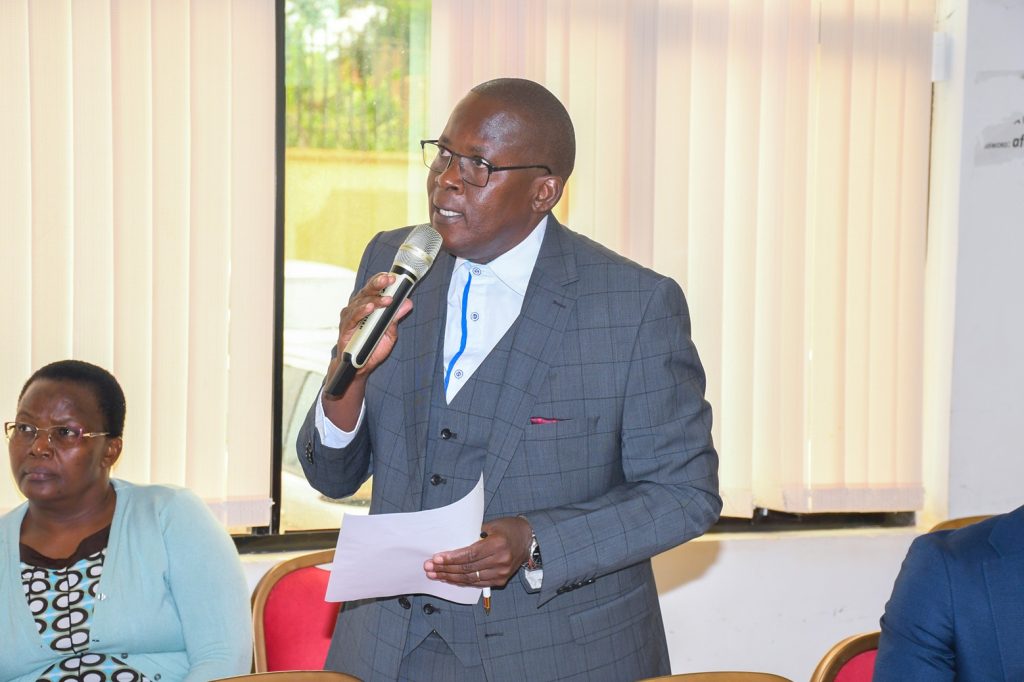
Deliberations during the forum focused on ensuring policy coherence across sectors such as agriculture, health, environment, energy, and industrialization. Stakeholders emphasized that the bioeconomy cuts across traditional sectoral boundaries and therefore demands integrated planning and coordinated oversight. The discussions also highlighted the importance of ethical research governance, biodiversity conservation, and equitable benefit-sharing in bio-based ventures. As Kenya seeks to expand its bioeconomy, sustainability principles must remain central to all initiatives.
The forum re-affirmed that collaboration among government agencies, universities, funding institutions, development partners, and the private sector is critical to building a resilient and inclusive bioeconomy ecosystem. It concluded with a shared commitment to advancing the National Bioeconomy Education and Policy Framework through continuous stakeholder consultations and structured implementation plans.