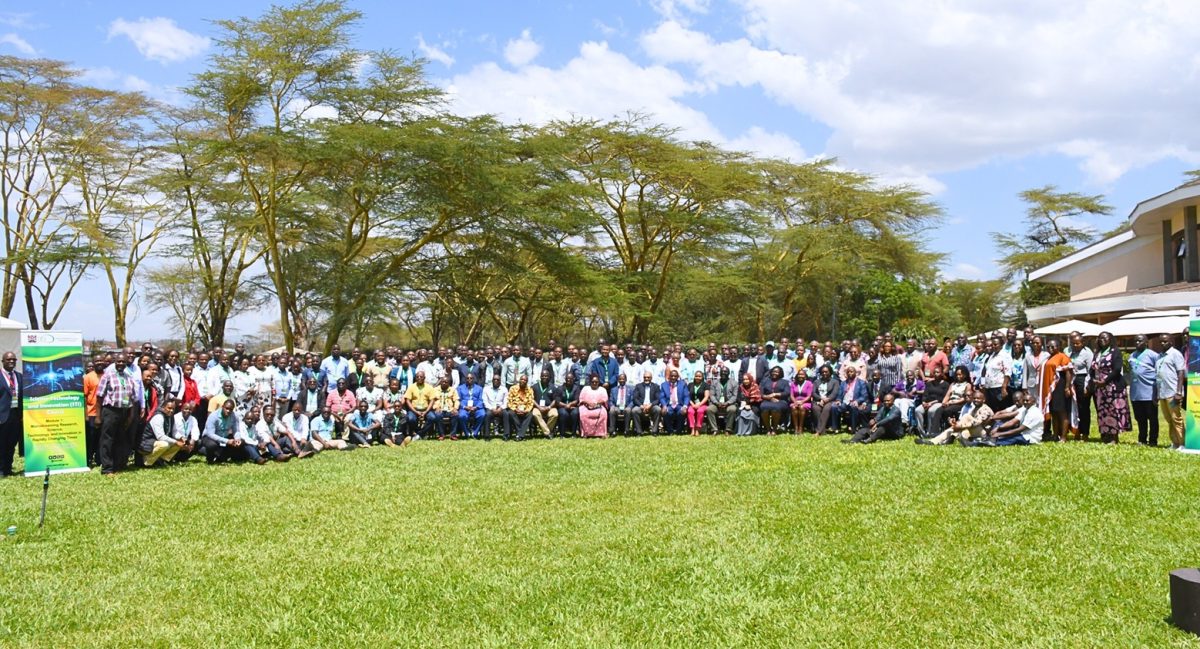
The National Commission for Science, Technology and Innovation organized the “Mainstreaming Research, Science, Technology, and Innovation in Rapidly Changing Times” training to help participants gain skills to inculcate RSTI in their institutions. The training brought on board over 300 participants, including CEOs, vice chancellors, researchers among others from the public and private sector, marking a pivotal moment in the nation’s efforts to integrate scientific progress into all sectors of the economy through research, innovation and evidence-based decision making (EBDM).
During the training, Ag. DG Dr. David Ngigi highlighted the rapid improvement of this training series spanning the curriculum, participation, and level of engagement. While previous sessions were smaller in scope, this fourth iteration is unique being the first time both the public and private sectors participated. He appreciated the participating institutions for their steadfast commitment to the STI Mainstreaming Indicator. The DG underscored the indicator’s role beyond simply being a clerical exercise but the key engine to shape decisions and inform global metrics that attract talent and resources to Kenya. Dr. Ngigi emphasized that this growth reflects a strategic effort to ensure all organs of the state department and private entities are transacting business with a unified scientific vision.
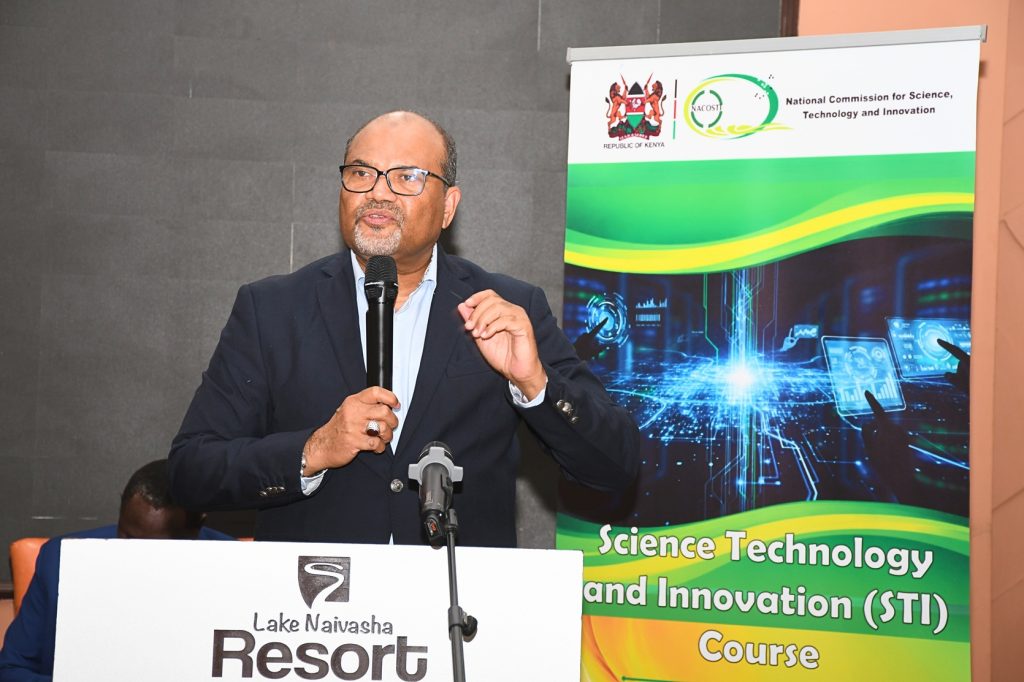
Prof. Shaukat Abdulrazak, the Principal Secretary (PS) for Science Research and Innovation, delivered an extensive keynote address that underscored the government’s commitment to making RSTI a cornerstone of national development. Such efforts include codifying RSTI reporting as a performance contract indicator, requiring institutions to provide annual data onto the critical importance of baseline data gathered through the indicator, including R&D expenditure, related human resources, available equipment and infrastructure, and RSTI outputs. He noted that the STI Mainstreaming Indicator has seen phenomenal growth, expanding from the initial 200 participating MDAs in the 2021 financial year to nearly 324 today.
Prof. Abdulrazak invited the private sector to share data and get involved in curriculum development since the government cannot effectively allocate resources or plan, “Unless you know what you have, you cannot allocate resources.” He also challenged the professors in attendance to take a more active role in mentorship and grant attraction to support knowledge creation and infusion.
The PS noted that Kenya currently spends approximately 0.8% of its GDP on R&D and reiterated Kenya’s ambitious target to increase this to 2% progressively. This follows President Ruto’s commitment to reach 1 trillion in R&D allocations in 10 years to spur innovation, commercialization and growth. He opined that Kenya should adopt a clustered approach to research benchmarking with Singapore and South Korea, where institutions break out of their silos and build synergies through specialized centers of excellence. To support the sector, the state department is finalizing several policies including AI, Biosecurity, Science Diplomacy, and Intellectual Property.
He announced that the National Research Fund (NRF) has open calls for Master’s and PhD programs, with a bold mission to produce 100 PhDs per million population to build necessary capacity.
Prof. Shaukat’s call to action was that everyone should be an ambassador of change in their institutions ensuring systemic change, robust collaboration and that data sharing becomes the norm.