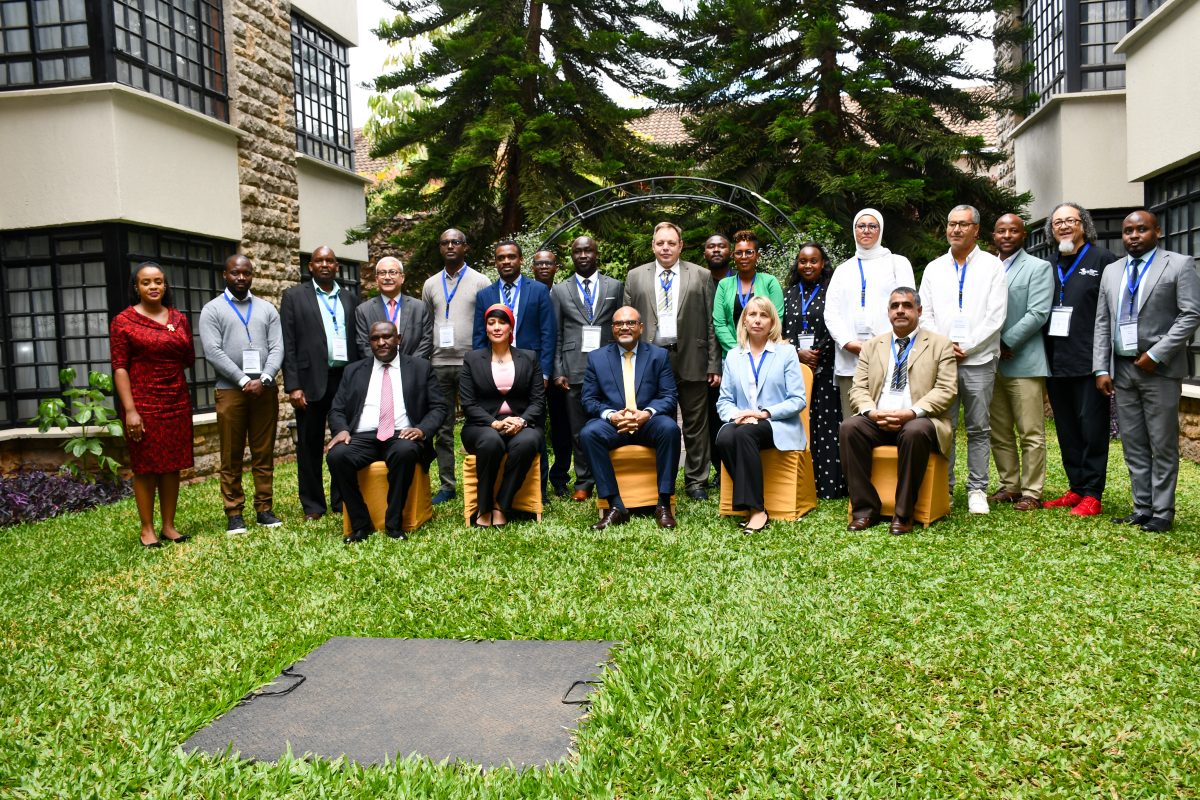
Kenya hosted a major regional summit bringing together educators, researchers, policymakers, and African scientists to transform public perception and education in nuclear science and technology. From August 31 to September 4, 2026, the five-day event aimed to establish a regional outreach network to engage secondary school students, expand mentorship, and dramatically increase the participation of women and youth across the continent’s scientific landscape.
Central to the discussions is the International Atomic Energy Agency’s (IAEA) Technical Cooperation Project RAF0065. Approved earlier this year, RAF0065 spans 44 African Member States and is designed as a human-capital initiative to build a sustainable pipeline of skilled professionals. Key stakeholders emphasized that Africa cannot afford to wait until students reach university to introduce them to these fields; early exposure during secondary school is critical to keeping learners from pursuing other pathways before discovering careers in nuclear science.
The project is designed as a human-capital development and education outreach intervention aimed at creating early awareness, addressing misconceptions and building a strong, skilled and diverse future workforce in nuclear science and technology. Speaking during the meeting, the Principal Secretary for the State Department for Science, Research and Innovation Prof Shaukat Abdulrazak underscored the importance of strengthening communication and public awareness around nuclear science and technology.
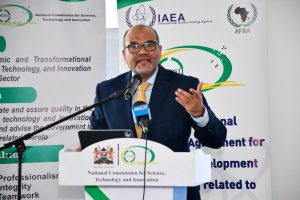
He noted that, in many African countries, the mention of nuclear science often creates negative perceptions, with many people immediately associating the subject with nuclear weapons and security concerns rather than its peaceful and practical applications. The Principal Secretary called for deliberate efforts to demystify nuclear science and technology and make the subject more understandable and relevant to communities, particularly young people. He emphasized that education, mentorship, training and effective communication must form the foundation for developing Africa’s next generation of scientists, engineers, researchers and innovators.
A major priority of the conference was shifting the public narrative away from long-held misconceptions. Speaking during the opening sessions, Kenya’s Principal Secretary for the State Department for Science, Research, and Innovation noted that mention of nuclear science often creates negative perceptions tied to weaponry and security threats. Delegates called for deliberate efforts to demystify the subject by highlighting its vital peaceful applications in cancer treatment, crop improvement, soil conservation, and groundwater management.
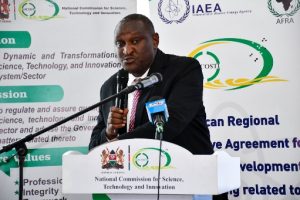
Building a robust professional pipeline early in the education system is critical to sustaining the future of nuclear science and technology across Africa. Speaking at the summit, the Principal Secretary emphasized that introducing students to science, technology, engineering, and mathematics must begin long before they reach higher education. Without early exposure, encouragement, and structured career guidance during secondary school, promising young learners often choose alternative professional paths before realizing the vast opportunities available in nuclear disciplines. By engaging students early, African nations can spark interest during formative learning years, demystify scientific pathways, and ensure that talented youth actively pursue nuclear and STEM-related careers.
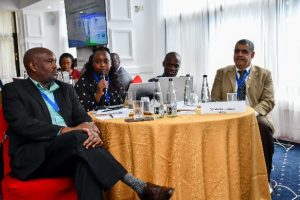
To fully capitalize on the continent’s rapidly growing youth demographic, delegates outlined a comprehensive talent pipeline strategy spanning school classrooms, universities, research institutes, and technical industries. Realizing this potential requires deliberate investment in teacher training, mentorship networks, hands-on innovation programs, and leadership development. The Principal Secretary stressed that establishing a self-sustaining workforce composed of African scientists, engineers, medical physicists, researchers, and educators essential for regional self-reliance. Cultivating local expertise allows the continent to break its long-standing dependence on foreign technical knowledge and directly control its own technological and scientific future.

The summit also places women and youth at the center of the continent’s scientific future. Project RAF0065 leverages proven models, such as target outreach in girls’ secondary schools, to build an inclusive workforce. Realizing this goal requires supporting local educators through specialized “train-the-trainer” programs, connecting secondary students with active industry mentors, and utilizing digital tools like artificial intelligence and virtual laboratories to bring complex concepts to life in under-resourced classrooms.
As the meeting concluded, participating nations finalized frameworks for the newly formed African Education Outreach Network. By sharing facilities, standardizing learning frameworks, and fostering cross-border student exchanges, the initiative provides Kenya and its regional partners with a unified platform. Delegates underscored that Africa must move from being a consumer of outside technologies to an independent developer of its own scientific talent, beginning directly in the secondary school classroom.